Introduction
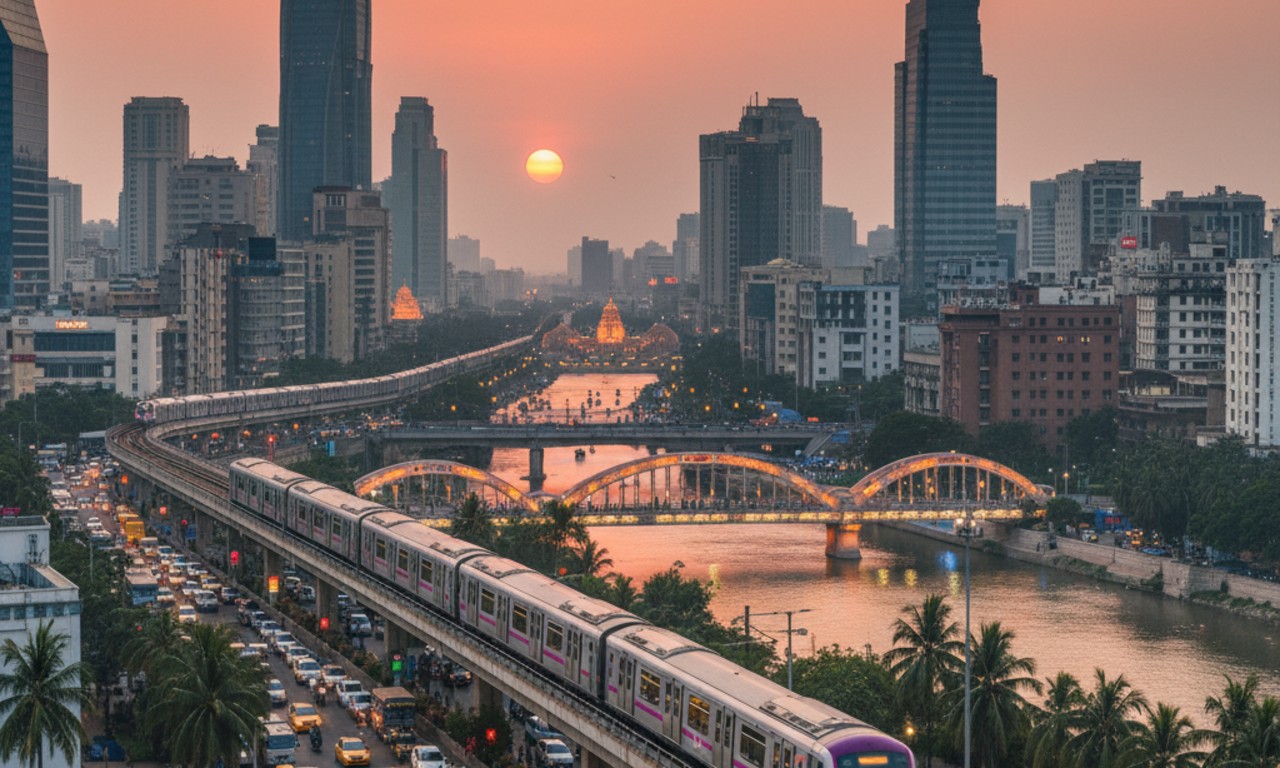
Metro cities of India represent the center of development of this country, its modernization, diversity, and aspiration. Mumbai is a city with its nonstop naughtiness and Chennai a city with its pristine culture.
We will discuss the leading metro cities in India, their significance and why they are desirable to place of living, working, and travelling.
What Are Metro Cities in India?
An Indian metro city refers to a big city, a highly developed, well developed city with a powerful infrastructure, good economy and contemporary facilities.
These cities are connected well, will have a great number of job opportunities and very high standard of living. They are fueling the economic and cultural development in India.
List of Metro Cities in India
India presently functions under eight recognized government-owned metro cities:
|
Rank |
Metro City |
State |
Known For |
|
1 |
Mumbai |
Maharashtra |
Finance, Bollywood, Seaside lifestyle |
|
2 |
Delhi |
Delhi (Union Territory) |
Politics, Heritage, Modern infrastructure |
|
3 |
Kolkata |
West Bengal |
Culture, Literature, Art |
|
4 |
Chennai |
Tamil Nadu |
IT, Education, Culture |
|
5 |
Bengaluru |
Karnataka |
Technology, Startups, Nightlife |
|
6 |
Hyderabad |
Telangana |
IT hub, Food, History |
|
7 |
Pune |
Maharashtra |
Education, Clean city, IT growth |
|
8 |
Ahmedabad |
Gujarat |
Industry, Heritage, Commerce |
Mumbai -Financial Capital of India.
Mumbai is leading in all categories of metropolitan cities in India. It is called the City of Dreams and it is the home of Bombay Stock Exchange, Bollywood and individuals representing every section of India. Everything revolves around a hectic life, and the Mumbai Metro and the local trains ensure daily commuting.
- Big sights- Marine drive, Gateway of India, Juhu Beach.
- Key sectors Education, Culture, Finance, Shipping.
- Personalities: Bandra, Andheri, South Mumbai.
There are also vast opportunities in terms of employment in Mumbai which brings on the youth talent of the small towns.
Delhi – The Capital of India
Delhi is one of the most developed metro cities of India which combines the old and the newly built one. The story of the transition of India in history to the current times can be viewed in the Red Fort to the Cyber Hub in Gurgaon.
The Delhi Metro is one of the largest systems in Asia which links the city and the NCR towns such as Noida, Gurugram and Faridabad of the surrounding area.
- Big attractions: India age, Qutub minar, Lotus Temple.
- Star industries: IT, Government, Media, Education.
- Well known markets: Chandni chowk, Connaught place, Sarojini Nagar.
Delhi is a favorite city in terms of its diversity, food and colorful work culture.
Kolkata – The City of Joy
Kolkata is the cultural city of India and one of the oldest metro cities where arts, literature and food merge to form a distinct beauty. India opened its first metro rail in the year 1984, which is called Kolkata Metro.
- Juvenile attractions: Victoria Memorial, Howrah Bridge, Park Street.
- Big entrepreneurships: manufacturing, Education, Art, Tourism.
- Known as: Durga Puja, Rosogolla, Adda ( discussion sessions).
The ancient world charm and the city development precondition the uniqueness of Kolkata.
Chennai the Southern India gateway.
Chennai boasts of its beauty, strong economy and culture. It is one of the fastest-developing metropolitan cities, in particular, in IT and automobile ones.
Millions of people who live in Chennai use the Metro on a daily basis.
- Aspect of primary attraction: Kapaleeshwar Temple, Marina Beach, Fort St.
- Leading industries: IT, Automobile, Education, Healthcare.
- Its signature food: Filter coffee, Bharatanatyam, Carnatic music.
Chennai still has its pathways but is also developing into a metropolis.
Bengaluru: the Silicon Valley of India.
Bengaluru also known as Bangalore, represents the technology hub in India, with the presence of big tech companies, start-ups, and specialists in the country. The city is also the best in plant life and favorable climate throughout the year.
- Popular places of sightseeing: Lalbagh, Cubbon Park, UB City.
- Diversified businesses: IT, Startups, Aerospace, Education.
- Of the popular places, Indiranagar, Whitefield, Koramangala.
Numerous technological and residential areas are interconnected by the Bangalore Metro, which reduces traffic pressure.
Hyderabad – The City of Pearls
Hyderabad is a mixture of tradition and contemporary development. It has Charminar and Biryani, as well as an emerging IT City that revolves around HITEC City. Hyderabad Metro is connected with business centers and the residential world.
- The leading attractions include Golconda Fort, Charminar, Ramoji Film City.
- Old economy industries: IT, Pharmaceuticals, Biotech, Real Estate.
- Popular delicacies: Hyderabani Biryani, Pearls, Nizam heritages.
Hyderabad is one of the cheapest and fastest up-and-coming Metros of young professionals.
The Pune education industry.
Students, technology employees, as well as retired people, prefer Pune due to its clean and peaceful atmosphere. It is also among the cleanest metros in India, which has a great deal of academic and industrial development. The Pune Metro has improved the connectivity within the city.
- The sightseeing spots include Shaniwar Wada, Aga Khan Palace and Sinhagad Fort.
- Primary sectors: IT, Education, Automobile, Manufacturing.
- Leisure activities: Colleges, Good weather, Night life.
The small and metropolitan level of the facility is a rare find in Pune, which is offering the small-city comfort.
Ahmedabad -The Gujarat industrial centre.
The largest city of Gujarat (Ahmedabad) is a growing metro city that is famous in terms of business, culture, and architecture. The Ahmedabad Metro links major urban areas of the city and Gondhaninagar.
- It has a wide variety of major attractions, including Sabarmati Ashram, Kankaria Lake, and Adalaj Stepwell.
- Big industries: Textiles, Chemicals, Food processing, IT.
- Well-known in the destinations: Garba, Pol houses, Street food.
Ahmedabad is emerging as a prime business hub in the world with strong infrastructure and development of lifestyles.
Why Metro Cities Matter in India.
Metro cities are not only big but they represent the development of India. They are also attractive in terms of investment. They create employment, enhance education and innovation and provide quality healthcare and transportation and also exhibit the cultural and economic diversities of the country. These cities are the drivers of the future of India, whether they be metro railways or the world business centers.
Metro Rail development in Indian Cities.
The metro rail network in India is growing at a very high pace, and this has enhanced transport in cities, decreased pollution, and saved time. Upcoming projects include:
- Surat Metro (Gujarat)
- Bhopal Metro (Madhya Pradesh)
- Kanpur Metro (Uttar Pradesh)
- Patna Metro (Bihar)
Such projects are soon to link more cities making them the future metros.
Living in Metro Cities – Opportunities and Challenges
Life in a big city offers a lot of advantages:
- Improved employment and business.
- Good education and medical care.
- Rich cultural life
- Good transportation and connection.
Yet challenges exist:
- High cost of living
- Traffic congestion
- Pollution and crowding
However, every year the number of people relocating to metros grows by millions of people attracted by the idea of prospects and development.
Living in Metro Cities – Opportunities and Challenges
By the year 2030, the number of people in the urban population will explode. There is a likelihood of addition of more tier-2 cities such as Lucknow, Surat and Indore to the list of metro. The future of urban India will be urban smart projects, digital infrastructure and green initiatives. Metro cities will remain economic powerhouse to the country.
Conclusion
Metro cities of India are also a symbol of ambition, culture and change. It can be the power of Mumbai or the mix of the past and the present in Delhi or the technological ambiance in Bengaluru, there is a different identification attached to every city. These are the cities where the Indian dreams come true, metro by metro.